
Screen printing vs embroidery for branded gifts
Choose a finish by checking the artwork, fabric and placement, then compare a printed sample and a stitch-out on the actual item.
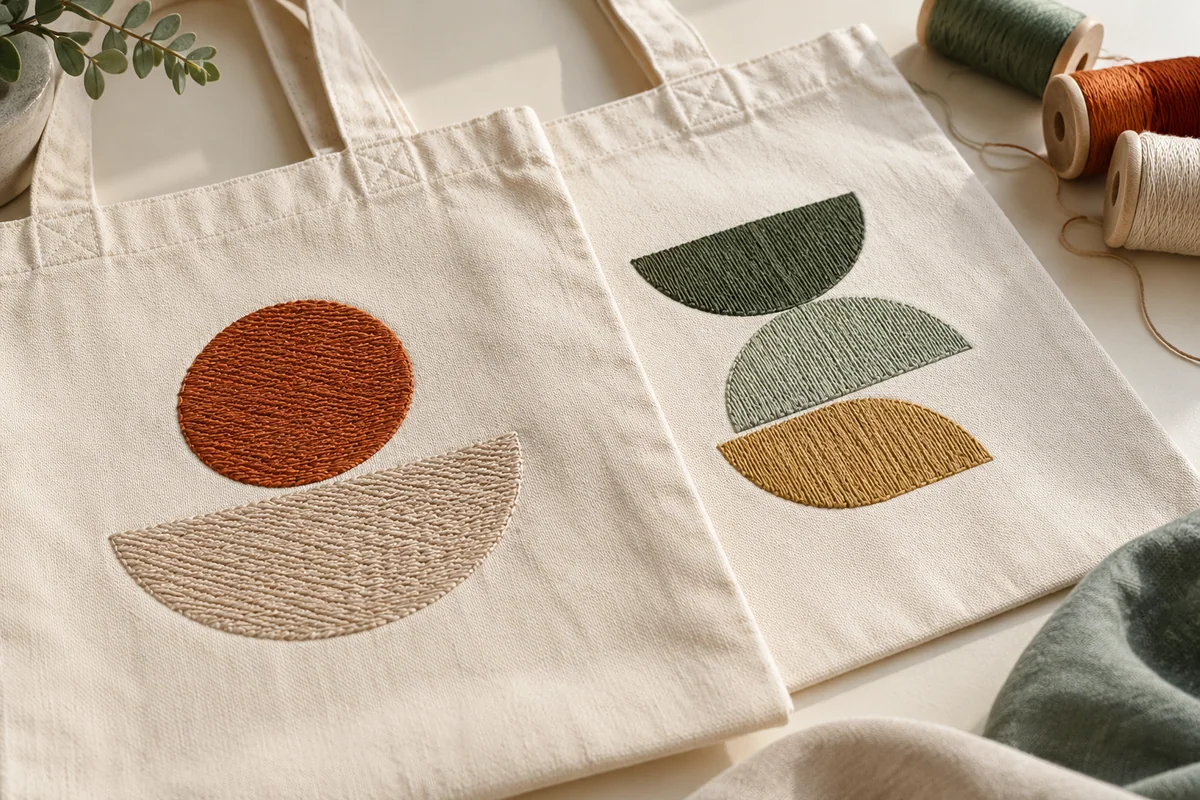
Start with the artwork size, the actual fabric and where the design must sit. Screen printing puts ink onto the surface through a mesh stencil. Embroidery sews the design with thread after the artwork has been converted into stitch instructions. Each method needs a sample on the chosen item before you approve production.
When screen printing makes sense
A broad flat graphic on a tote or shirt is a good candidate for a print quote. Specify the finished logo width and height, each print location, the fabric colour and the colours in the artwork. Ask how many screens are planned and whether a light design on a dark fabric needs an underbase.
Mesh and ink affect which details reproduce and how much ink is deposited. Inspect small letters, thin lines, coverage and the alignment of separate colours. On a tote, measure the clear printing area between the seams and handle attachments so a flat artwork preview does not hide a placement problem.
When embroidery makes sense
Ask for an embroidery quote when you want visible stitching on a cap, bag or garment. Send the logo at final size and specify the base fabric, placement and thread colours. The digitiser may need to simplify small lettering or adapt the stitch density or thread weight. The backing and stitching need to suit the fabric, especially if it stretches.
Inspect the actual stitch-out from the front and the reverse. Check that letters are legible, the fabric lies as expected and the backing suits the item. A flat canvas proof leaves open how the same design will behave across a cap seam or on a stretchy garment.
Compare the same product, placement and sample
Suppose an event team wants a wide two-colour design on a tote and a compact emblem on a cap. Quote the tote as a print on the selected canvas, and request a cap stitch-out before signing off on embroidery. If a supplier recommends another finish for either item, ask which details or placement would change.
For the same item quoted both ways, keep the fabric, colour, quantity and design dimensions fixed. Ask for separate lines for screens or digitising, decoration per unit, sample and any rework needed before production. Photograph the accepted sample with a ruler or placement reference. Ask how you can check it against finished stock.
See the gift printing guide or send your artwork and product for a quote.
Frequently asked questions
Should I screen print or embroider a large tote design?
Request a screen-print quote for a broad graphic and approve placement and coverage on the chosen canvas. If you want stitching, ask for a stitch-out at the same size to check weight, puckering and detail.
Can embroidery reproduce small lettering?
The result depends on the artwork, thread, stitching and fabric. Ask the digitiser to flag detail changes and confirm legibility on a physical sample at the agreed size.
Sources
Discuss a sourcing request related to this article.Screen printing vs embroidery for branded gifts